

Recent developments in northeastern Syria have reignited fears of instability and renewed threats from Islamic State (ISIS) elements, raising profound concern for the region’s fragile Assyrian and broader Christian communities.
Major news agencies report clashes between Syrian government forces and the Kurdish-led Syrian Democratic Forces (SDF), linked to a broader political transition after President Ahmed al-Sharaa assumed power in 2024. In the midst of these confrontations, security breakdowns at key detention facilities have occurred, with conflicting reports over the scale of the incident at a prison in the town of Shaddadi. Syrian officials have stated that roughly 120 Islamic State detainees escaped amid the unrest, while Kurdish sources cited in Reuters have claimed the number could be as high as 1,500. Syrian government forces have recaptured many of those fugitives, but the situation remains fluid.

These events unfold as part of a wider, U.S.-facilitated shift in policy toward integrating the Kurdish SDF into the reconstituted Syrian state. According to a recent statement by the U.S. envoy, Washington views the post-Assad transition as “the greatest opportunity” for Syria’s Kurds to secure citizenship rights, cultural protections, and political participation long denied under previous regimes. This includes the potential for constitutional recognition of Kurdish language and culture and expanded political inclusion.
But for Syria’s Assyrian and Christian populations — among the oldest indigenous communities in the region — the implications of these security developments are deeply unsettling. Even before the current escalation, centuries-old communities had endured devastating losses. Estimates indicate that Syrian Christians, who once made up around 8–10 percent of the population, have declined precipitously to a small fraction of their historic presence, as conflict, persecution, and targeted violence forced many into exile. Many within the Middle East's Christian communities blame the plans and actions of the United States.

The potential resurgence of ISIS elements — emboldened or enabled by chaos at detention centers — represents a direct threat to religious minorities. Groups like ISIS have previously perpetrated genocide, mass displacement, and systematic persecution of Christians, Yazidis, and other minority communities in Syria and Iraq. The release or escape of even a fraction of trained fighters or ideologues could enable renewed cycles of terror and ethnic violence that disproportionately endanger vulnerable populations. Civil society organizations such as the European Syriac Union have warned that destabilization of camps and prisons “increases the risk of terrorist elements once again spreading throughout Syria, the region, and the world,” with potentially catastrophic consequences for Assyrians and other communities.
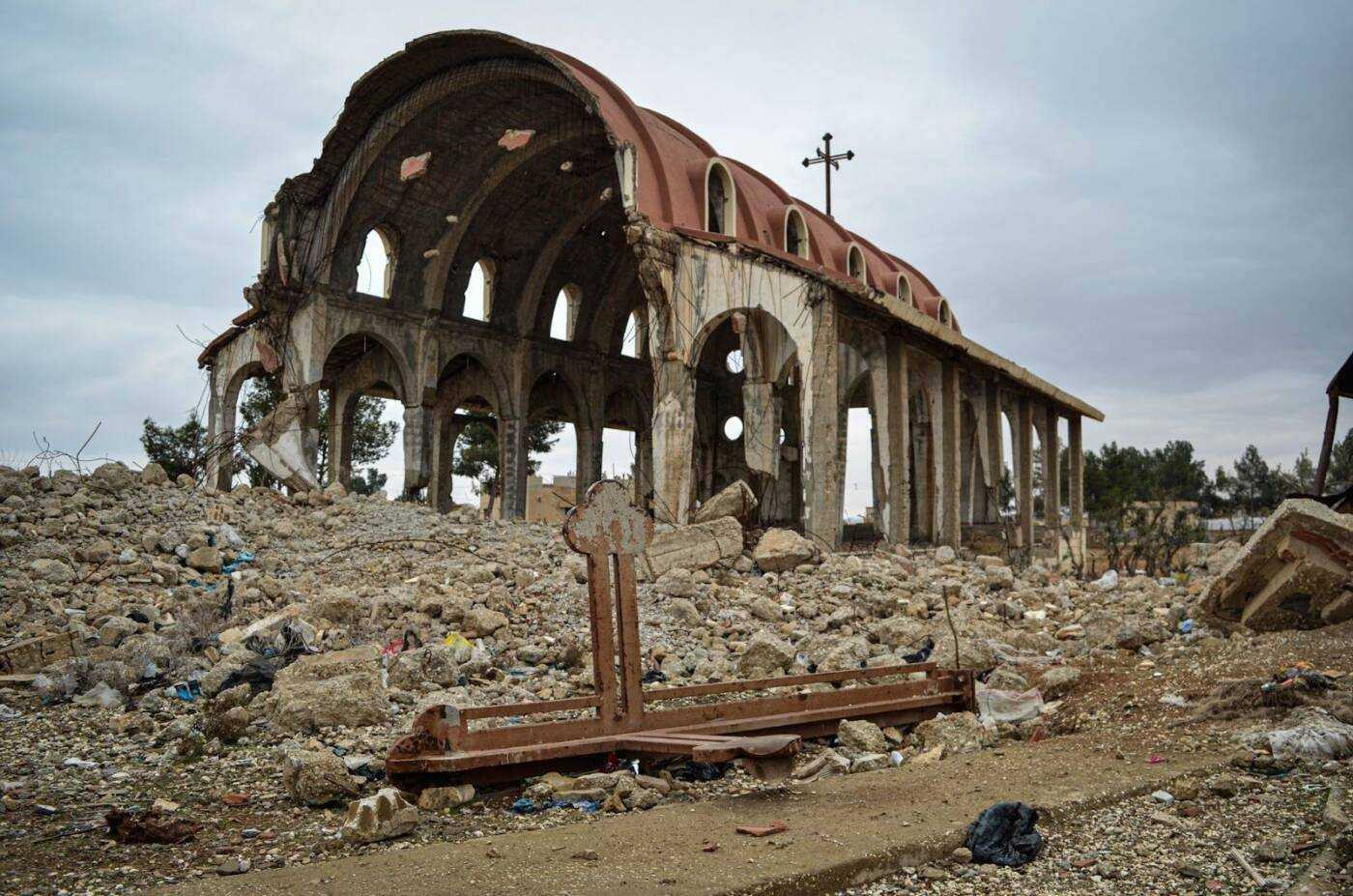
Assyrian and Christian communities in Syria already confront a precarious future. Over the past decade, many have fled ancestral towns and villages in search of safety, shrinking what were once vibrant centers of cultural and religious life. Churches, monasteries, and cultural landmarks have been damaged or destroyed, and survivors live under the constant threat of displacement. Incidents of targeted violence — both by extremist groups and in the broader chaos of Syria’s fractured conflict — have reinforced a sense of existential risk.
The current transition raises complex questions: Will the reintegration of Kurdish military structures into a unified Syrian state stabilize the security situation, or will it accelerate power struggles that create vacuums exploited by extremist actors? Can constitutional promises of minority rights be realized in practice in a nation still grappling with deep ethnic and sectarian fault lines? And critically, will the international community prioritize protections for minorities whose very presence in Syria hangs in the balance?
For Syria’s Assyrians—whose very name gave birth to the name Syria itself, and whose presence in the land stretches back millennia—the resolution of these questions will determine whether their future in their ancestral homeland is one of continued survival or final erasure.