

January 27, 2026
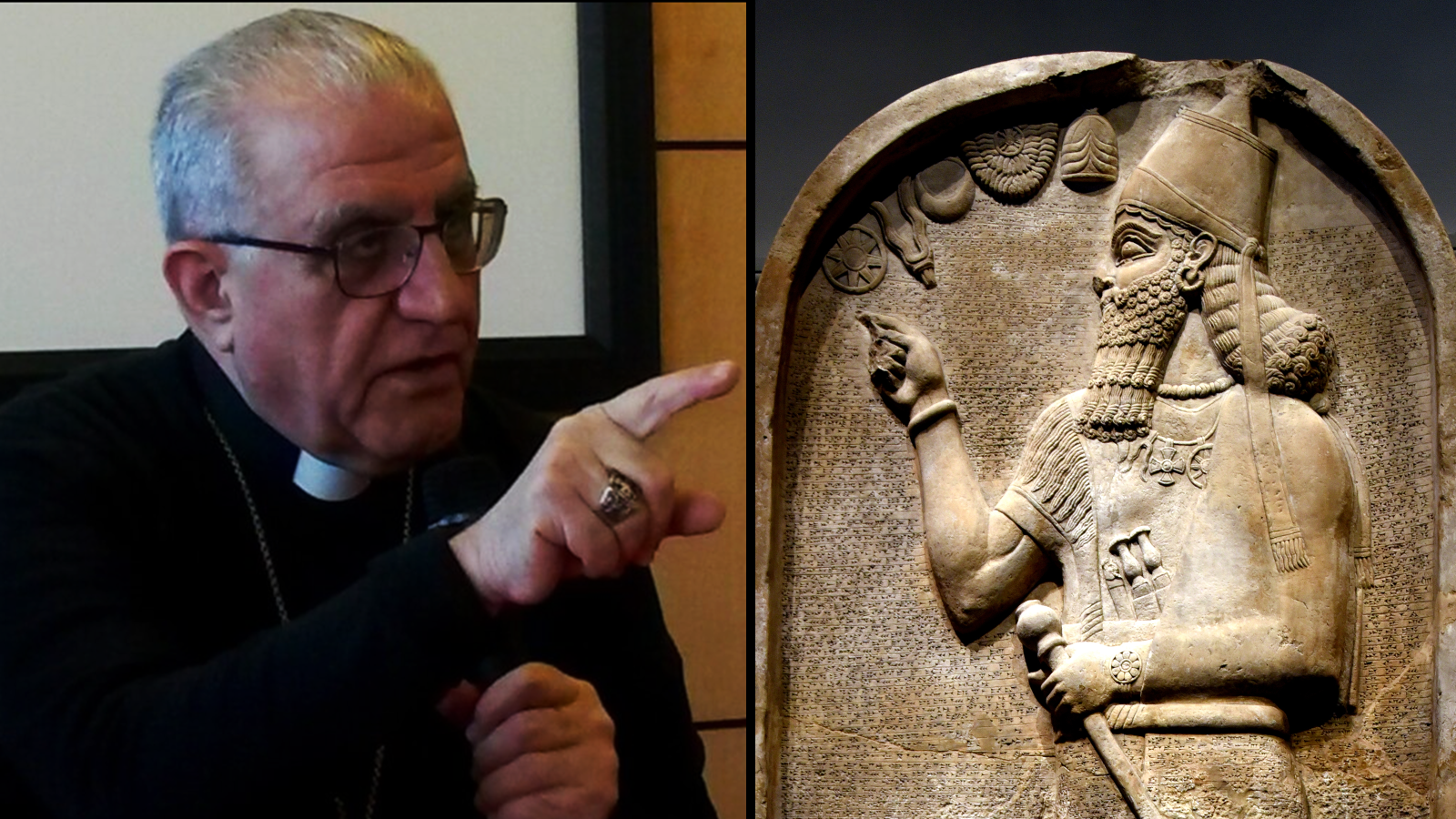
Erbil, Iraq – During the observance of the Rogation of the Ninevites, Archbishop Yousif Thomas Mirkis made remarks regarding Assyrian civilization that have prompted reflection among scholars and the faithful regarding historical understanding and cultural memory.
In his statements, Archbishop Mirkis described Assyrian civilization, the very civilization of his ancestors, as the “ugliest” or “most detestable” in human history. Such portrayal contrasts sharply with a long-standing tradition of reverence for Assyrian heritage within Assyrian Christianity, particularly in connection with Bā’ūṯā ḏ-Ninwāyē, or the “Petition of the Ninevites.” This observance, maintained by the Assyrian Church of the East, the Ancient Church of the East, the Chaldean Catholic Church, and other Christian communities, commemorates the repentance of the Assyrian Ninevites following the preaching of the prophet Jonah, emphasizing prayer, fasting, and moral reflection.
Historically, the fast originated during a devastating plague that afflicted Mesopotamia and Assyria in the Sixth Century AD. The metropolitans of the East Syriac ecclesiastical provinces of Assyria or Adiabene (encompassing Arbil, Nineveh, and Hakkari) and Beth Garmaï (encompassing Kirkuk and the surrounding region) called for services of prayer, fasting, and penitence in all churches under their jurisdiction, following the example of the Ninevites. This tradition has been strictly observed for centuries. Patriarchs of both the Church of the East and Chaldean Catholic Church have also called for additional fasts to alleviate suffering in times of crisis, including during the persecution by ISIS in Nineveh and the broader Middle East.
Archbishop Mirkis further incorrectly stated that Assyrians, when conquering cities, inflicted casualties indiscriminately, without regard for elders, women, or children. This characterization does not reflect Assyrian records, or the consensus of contemporary historians and Assyriologists, who recognize the Assyrian Empire as a sophisticated civilization that left enduring contributions to governance, law, literature, and culture worldwide.
Assyrian or Syriac Christian literary tradition similarly reflects admiration for the Assyrian ancestors. In a 4th-century poem, Mar Aprem (Ephrem) of Nisibis and Edessa wrote of the Assyrian Ninevites: “The king [of Assyria] stood up and stripped off his cloak… So that they [the Assyrian Ninevites] deceived Jonah through repentance.” (Michael Penn, Invitation to Syriac Christianity; An Anthology, p.208) Such texts frame biblical histories in ways that acknowledge the power and sophistication of Assyria, even while reflecting on moral shortcomings.
The New Testament further affirms the Ninevites’ moral example when Jesus states “The men of Nineveh will stand up at the judgment with this generation and condemn it; for they repented at the preaching of Jonah, and now something greater than Jonah is here.” (Matthew 12:41)
Scholars have long recognized the complexity of Assyrian governance and culture. A.T. Olmstead observed that while Assyrians were imperialists like many ancient powers, “example after example may be cited…where enemies, nay, even rebels, were forgiven, were granted rings and clothes of honor, their gods were repaired and restored, their territory increased.” (Olmstead, History of Assyria, pp. 645–647)
The achievements of Assyria are also evident in its literary and archaeological legacy. Professor André Charles Ulrich Parrot, a French archaeologist, Assyriologist, and Lutheran pastor, noted that the Library of Ashurbanipal in Nineveh contained tens of thousands of cuneiform tablets spanning literary, scientific, religious, and administrative genres—an unparalleled collection in the ancient Near East until the Library of Alexandria. (Parrot, The Arts of Assyria)
Assyrian Christian figures have long celebrated their ancient heritage. Rabi Addai Alkhas declared in 1952, “We may, with pride, preach to the world that its civilization had begun with us; writings on tablets for thousands of years…have today risen from their graves and attest to this.” (Gilgamesh magazine, April 8, 1952) His brother, Rabi John Alkhas, reminded future generations that they “have been created from this soil and its waters, as those who lived here were made of this soil mixed with the blood of the gods. And so every step that you take, do it in silence and with honor…” (Gilgamesh Magazine, No. 29, 1954)
The Archbishop would benefit from examining Assyrian history with the same meticulous scholarship exhibited by Iraqi historians. As Dr. Khazal Al Majidi has pointed out, “I know of no people as unfairly treated as the Assyrians…,” a stark reminder of the frequent distortion and neglect of Assyrian achievements in many Western narratives. From this perspective, the Archbishop’s remarks appear ill-informed and strikingly unjust, especially given his own heritage and the fact that they were made in the heart of the Assyrian homeland. Such commentary risks perpetuating the very marginalization that scholars like Al Majidi have long sought to correct.
Editor, Nineveh News