

April 5, 2026
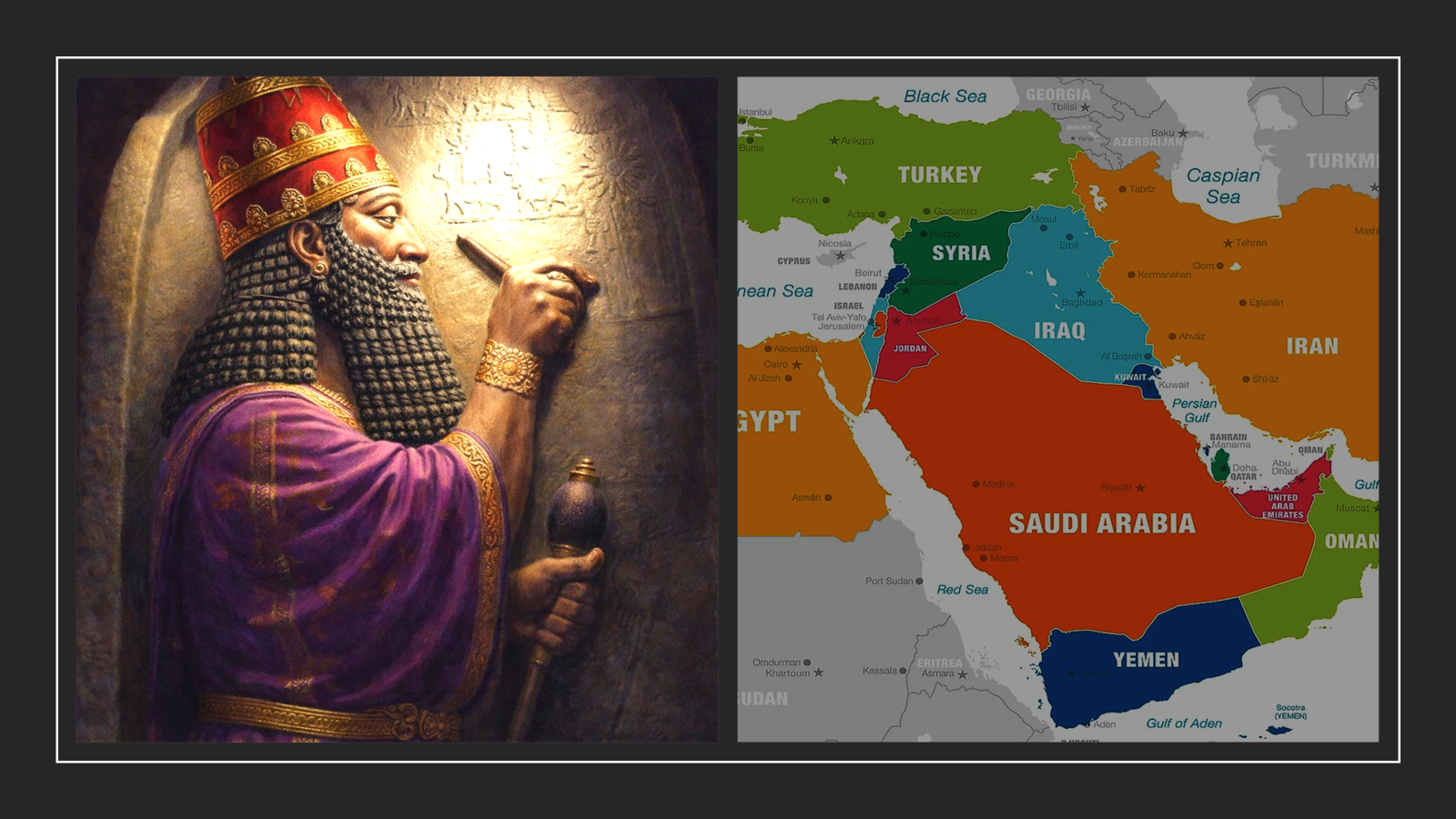
Chicago - The reign of King Esarhaddon (681–669 BC), son of King Sennacherib, represents one of the most consequential phases in the history of the Assyrian Empire. His kingship stands at the intersection of consolidation and expansion, combining internal stabilization with outward imperial ambition. Above all, his legacy rests on a singular achievement: he was the first Assyrian king to conquer Egypt, thereby extending Assyrian imperial reach to the Nile and transforming the geopolitical map of the ancient Near East.
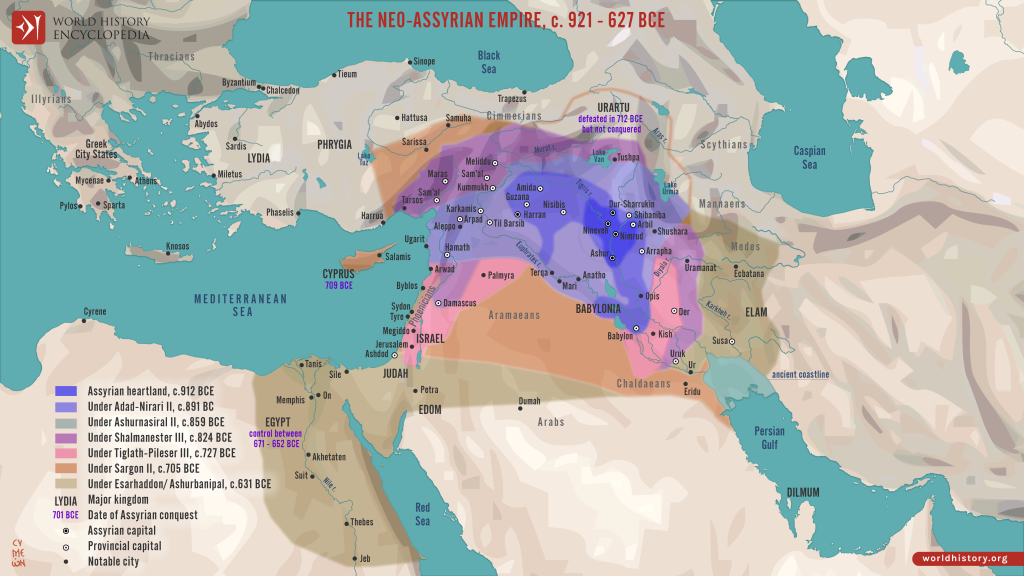
Yet, recent interpretive work, particularly that of Stephen Compton, invites a reconsideration of the full geographical scope of Esarhaddon’s campaigns. If Compton’s reading of the royal inscriptions is sustained, Esarhaddon’s ambitions may have extended even further than traditionally assumed, potentially reaching deep into the Arabian Peninsula, even as far as Yemen. Such a claim, while not yet mainstream, demands serious scholarly engagement.
I. Esarhaddon as Imperial Restorer
Esarhaddon inherited fragile circumstances. The assassination of his father Sennacherib and the subsequent succession crisis threatened Assyrian stability. Upon securing the throne, Esarhaddon pursued a deliberate policy of restoration; political, religious, and infrastructural. He famously rebuilt Babylon, reversing his father’s destruction of the city, thereby re-legitimizing Assyrian kingship in the eyes of southern Mesopotamia.
His inscriptions reflect a ruler deeply concerned with divine sanction and universal kingship. Like earlier Assyrian monarchs, Esarhaddon adopted the traditional titulary of the “king of the universe,” but he operationalized this ideology through concrete territorial expansion.
II. The Conquest of Egypt: A Turning Point in Near Eastern History
Esarhaddon’s Egyptian campaign marks one of the most extraordinary military achievements of the ancient world. After an initial invasion in 673 BC, he reorganized and launched a second campaign in 671 BC, culminating in the capture of Memphis, the heart of Egyptian political power.
This victory had several profound implications:
- First Assyrian Conquest of Egypt: No previous Assyrian ruler had successfully subdued Egypt. Esarhaddon accomplished what Tiglath-Pileser III and Sennacherib had not.
- Defeat of Taharqa: The Kushite pharaoh Taharqa was driven south, and his royal family was captured and deported to Nineveh.
- Imperial Integration: Esarhaddon reorganized Egypt into a vassal system, installing local rulers such as Necho I under Assyrian oversight.
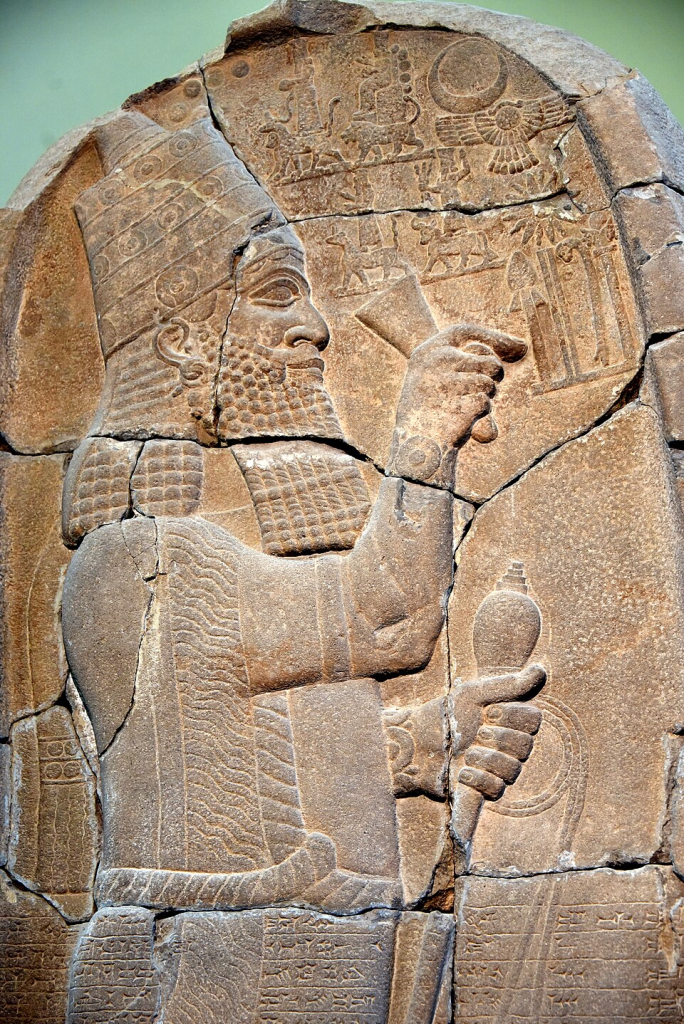
- Symbolic Domination: His victory stelae, such as those at Zincirli and Nahr el-Kalb, visually proclaimed Assyria’s supremacy over Egypt, even juxtaposing Assyrian and earlier Egyptian imperial legacies.
The conquest of Egypt represented the zenith of the Assyrian empire, which had dominated the Near East almost consistently since the time of Ashur-uballit I (c. 1363 BC). It effectively brought the entire Fertile Crescent, Levant, and Nile Valley under Assyrian hegemony. This was an unprecedented imperial configuration.
III. Arabia in Esarhaddon’s Imperial System
While Egypt dominates the narrative, Esarhaddon’s Arabian campaigns are equally important for understanding the southern dimension of Assyrian imperialism.
Primary sources attest that:
- Esarhaddon exercised authority over Arabian polities such as Adummatu (Dumat al-Jandal).
- He installed and recognized Arabian rulers, such as Yauta, as vassals.
- Tribute networks extended into northern Arabia, involving camels, aromatics, and luxury goods.
These campaigns were not mere raids but part of a structured imperial system. Arabia functioned as a buffer zone and trade corridor, linking Assyria to the lucrative incense routes that extended toward South Arabia.
IV. The Compton Hypothesis: A “Lost” Assyrian Conquest of Yemen?
Stephen Compton’s recent work proposes a provocative thesis: that Esarhaddon’s inscriptions, when read with attention to geographic sequencing and distances, describe not merely campaigns in northern Arabia, but a sustained march deep into the Arabian Peninsula and reaching Yemen.
This interpretation rests on several methodological pillars:
- Textual Sequencing: Assyrian royal inscriptions often list conquered regions in geographic order. A careful reading may suggest a southwest trajectory beyond traditionally identified locations.
- Distance Calculations: Compton reportedly correlates marching distances described in the inscriptions with real-world geography, arguing that the distances exceed those required for northern Arabian campaigns alone.
- Imperial Logic: Given Assyria’s interest in controlling trade routes, a push toward South Arabia, the center of the incense trade, would align with broader imperial strategy.
V. Critical Assessment
From a strictly academic standpoint, Compton’s hypothesis is intriguing but remains unverified within mainstream Assyriology. Several issues must be addressed. Specifically, corroboration in other texts. However, Assyriology has repeatedly advanced through the re-reading of known texts. If Compton’s geographic analysis withstands scrutiny, it could significantly expand our understanding of Assyrian imperial reach and transform the traditional map of the Assyrian empire.
VI. Esarhaddon’s Place in Assyrian and World History
Even without the Yemen hypothesis, Esarhaddon stands among the greatest Assyrian kings:
- He stabilized the empire after internal crisis.
- He redefined imperial governance through vassal systems.
- He achieved the conquest of Egypt, a feat unmatched by his predecessors.
- He extended Assyrian influence deep into Arabia, integrating it into imperial networks.
If Compton’s theory proves correct, Esarhaddon’s legacy would be even more extraordinary, transforming him from a conqueror of the Near East into a ruler whose campaigns spanned from the mountains of Iran to the southern extremities of Arabia.
VII. Contemporary Relevance
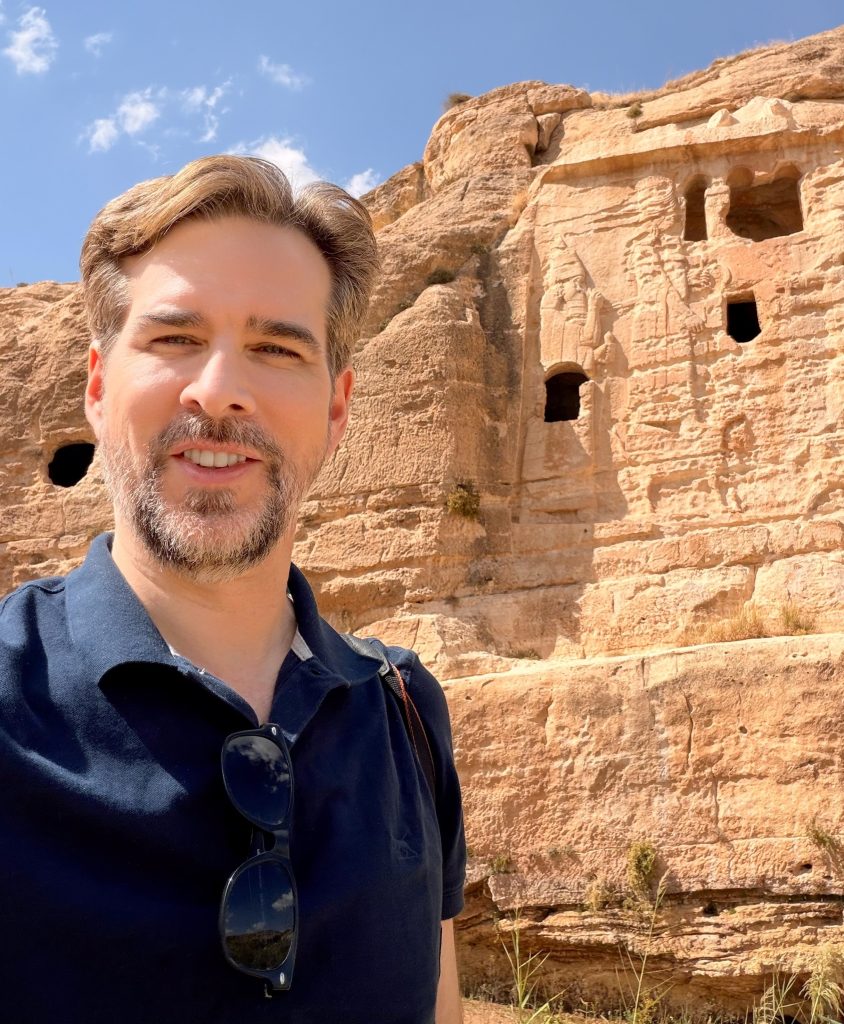
The forthcoming lecture by Stephen Compton on April 18, 2026, in Chicago, as part of the Assyrian Cultural Foundation’s Assyrian Renaissance gathering at the Hyatt Regency Hotel, represents a significant moment. It signals not only a new interpretive proposal but also the continued vitality of Assyrian historical inquiry within both academic and community contexts. For scholars and the Assyrian community alike, Esarhaddon’s story remains unfinished; open to reinterpretation, grounded in texts, and alive in historical memory.
Esarhaddon’s reign marks the apogee of Assyrian imperial ambition. His conquest of Egypt alone secures his place in history. Yet the possibility that his campaigns extended even further, into the depths of Arabia, reminds us that the ancient sources still hold untapped potential. The task of the modern Assyriologist is not merely to preserve these records, but to interrogate them anew.