

May 17, 2026
San Jose, California - They were condemned before they ever stood before a judge. Public opinion hardened instantly, and even members of their own community rushed to denounce them without waiting for the facts to emerge. Had they exercised patience and restraint, they would have discovered that many of the assumptions driving the outrage were fundamentally flawed.
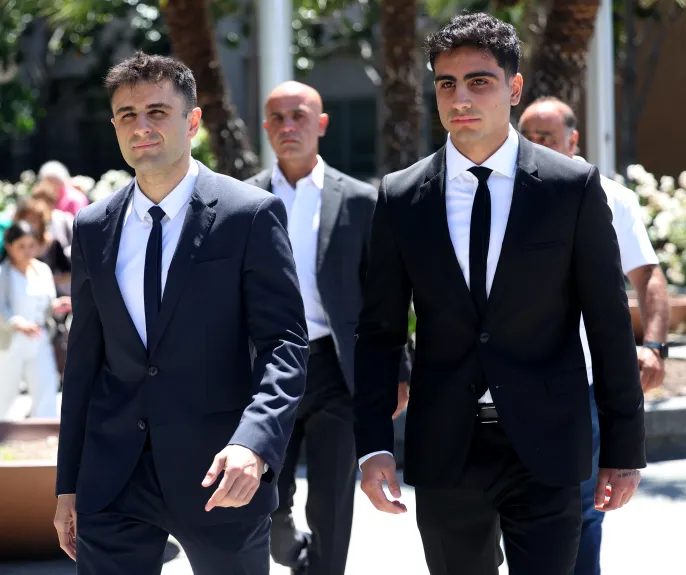
Bruniel Chamaki, an Assyrian-American community member known for his involvement with the Assyrian Advisors, appeared in court this week alongside Roma Akoyans and Ramon Akoyans in connection with a March 8 altercation in the Santana Row district of San Jose. Prosecutors formally charged the three men with felony assault and misdemeanor battery, but acknowledged that the evidence uncovered during the investigation did not support the hate crime allegations that had been aggressively promoted as central to the case from the outset.
The case drew widespread attention after videos of the confrontation circulated online and early narratives claimed the victims, two Israeli-Americans, had been attacked for speaking Hebrew. Before investigators had completed their review, commentators on social media, advocacy groups, and public figures, including many in the Assyrian community, publicly framed the incident as an antisemitic hate crime. The allegation spread rapidly across digital platforms, where emotionally charged interpretations often move faster than verified facts.
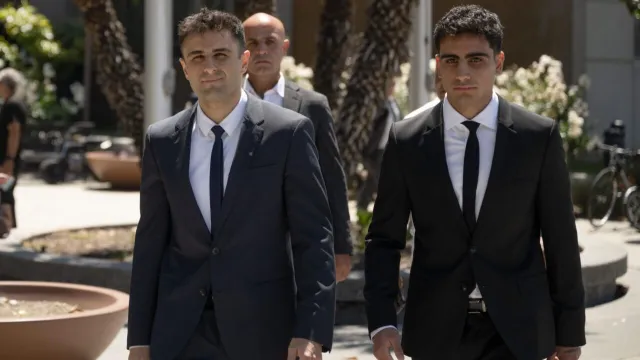
Yet in court this week, prosecutors acknowledged that the evidence did not support hate crime enhancements.
“The information and evidence we have uncovered, upon a thorough investigation, does not support filing a hate crime allegation,” Deputy District Attorney O’Bryan Kenney stated following the arraignment.
Defense attorneys argued that public perception had been shaped less by evidence than by viral clips and online speculation. Attorney Sam Polverino stated that many people had “jumped to conclusions” before understanding the full context of the altercation.
The case illustrates a growing tension in the modern legal and media environment: the traditional American principle of “innocent until proven guilty” increasingly struggles to survive in the age of viral outrage, algorithmic amplification, and instant public judgment.
Legally, the presumption of innocence remains a foundational principle of the American justice system. In practice, however, accusations, especially allegations involving hate crimes, racism, antisemitism, or politically sensitive motives, can produce immediate and often irreversible reputational consequences long before any courtroom determination is made.
On social media, the accusation itself frequently becomes the punishment.
Once a person’s name is associated with terms like “hate crime” or “antisemitism,” the distinction between allegation and proven fact often collapses in public discourse. Viral posts, clipped videos, influencer commentary, and emotionally charged headlines can cement narratives that persist even after prosecutors decline to pursue the underlying claims. Retractions, clarifications, and legal nuances rarely receive the same visibility as the original accusations.
The dynamic becomes even more powerful when influential advocacy organizations, political activists, or prominent online personalities adopt and amplify a narrative before an investigation concludes. In such environments, public opinion can harden rapidly, creating intense pressure on employers, institutions, communities, and even prosecutors themselves.
For many individuals accused in such cases, reputational damage can endure regardless of the legal outcome. Careers may be harmed, social relationships fractured, and community standing permanently altered—even in situations where charges are reduced, allegations disproven, or no criminal charges ultimately filed at all.
Supporters present at the arraignment included members of the local Assyrian community, many of whom expressed concern that Chamaki and the other defendants had been publicly condemned before the facts were fully established. Following the hearing, Chamaki thanked supporters in a Facebook post, writing:
“In moments like these, I’m reminded why I’m so proud to be Assyrian. The love, support, and solidarity our community has shown means more to us than words can express. When people are tested, you see who truly stands beside you, and our community has shown up with strength, courage, and heart.”
Chamaki has previously been active in Assyrian civic and professional initiatives through Assyrian Advisors, an organization focused on networking and community engagement among Assyrian-Americans.
The underlying assault case remains ongoing, and prosecutors say they will continue examining the circumstances and motivations surrounding the confrontation. The defendants are expected to return to court later this summer.
But irrespective of the final legal outcome, the controversy has already become a case study in how social media ecosystems increasingly shape public judgment before courts ever reach a conclusion, and how, in modern America, the mere accusation of a hate crime can become a lasting stain even absent proof, conviction, or formal hate crime charges.