
Editorial by Archdeacon Emanuel Youkhana
For decades, Assyrians have spoken about survival. We speak of our ancient civilization, our language, our churches, our martyrs, and our history stretching back thousands of years. We celebrate our heritage at festivals, conferences, church gatherings, and cultural events across the United States, Europe, and Australia.
Yet while we celebrate our history, the geography of that history is quietly disappearing.
The numbers coming from the Assyrian and Chaldean villages of northern Iraq tell a story that is difficult to ignore. They are not political slogans. They are not emotional appeals. They are demographic facts.
Across a vast region stretching from the outskirts of Dohuk to the center of Shiladze, encompassing the historic Sapna region and the subdistricts of Zawita, Mankish, Sarsink, Bamarni, and Shiladze, only 883 Assyrian and Chaldean families remain, totaling just 3,069 people.
Think about that number.
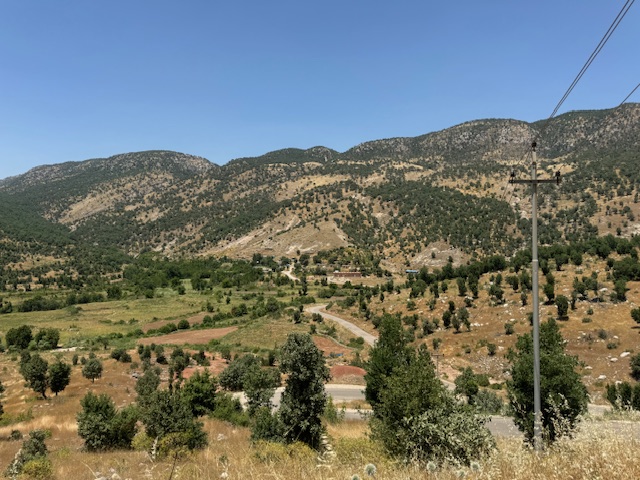
More than twenty-two villages and town centers spread across approximately two hours of mountainous terrain are now home to fewer than 3,100 people.
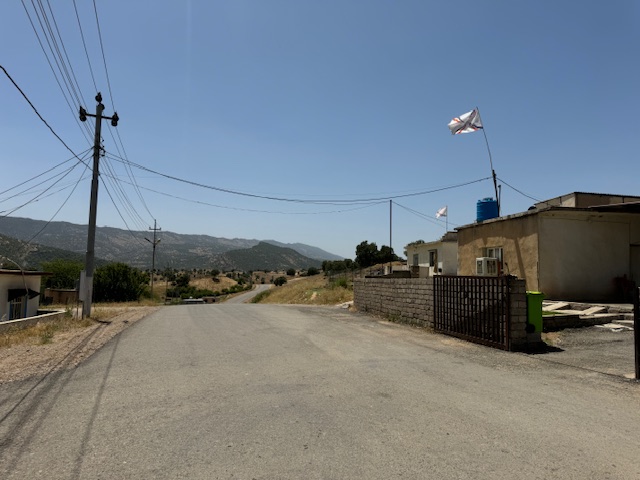
Some villages that once sustained generations of Assyrians now contain only a handful of families:
- Hamziya: 5 families
- Sardrawa: 9 families
- Kundkusa: 12 families
- Tan (Tin): 13 families
- Romta: 13 families
- Bakiri: 15 families
- Pablo (Bablo): 19 families
- Dahi: 19 families
One village, Deiri, has no permanently residing Assyrian families at all.
These are not merely statistics. They represent the erosion of an indigenous presence that has existed in these mountains for centuries.
The Empty Houses of Assyria
The crisis becomes even clearer when one examines the number of abandoned homes.
Nineteen houses stand empty in Bablo. Twenty-nine are unoccupied in Bibidi. Sixteen sit vacant in Bakiri. Thirty are empty in Sardrawa. Twenty-five remain uninhabited in Dahi.
Some are used seasonally. Others serve as storage. Many are locked and abandoned. Some are deteriorating and at risk of collapse.
Every empty house tells the story of a family that left.
Every abandoned home marks another chapter in the slow demographic retreat of Assyrians from their ancestral homeland.
When Schools Close, Communities Disappear
Perhaps the most alarming indicator is the closure of Syriac schools.
Primary-level Syriac schools once operated in Dahi, Dawudiya, and Tin. They have now closed because there are no longer enough students.
The disappearance of a school is not simply an educational issue. It is often the final warning sign before a community loses its future.
When children disappear, the future disappears with them.
One Apartment Complex vs. Twenty-Two Villages
The statistics contain a comparison that should shock every Assyrian living abroad.
A single apartment complex in the center of Dohuk contains 19 buildings with 40 apartments each, totaling 760 families.
By comparison, the combined Assyrian and Chaldean population of twenty-two villages and town centers across an entire historic region totals only 883 families.
In other words, nearly as many families live in one modern apartment complex as remain across a broad swath of historic Assyrian territory.
The reality becomes even more striking in Bakiri. The Assyrian section of the village contains only 15 Assyrian families, while approximately 770 Kurdish families live in and around the same area.
Demographic change is no longer a future concern. It is a present reality.
The Diaspora Question
The most important question raised by these figures is directed not at Baghdad, Erbil, or the international community.
It is directed at us.
What have Assyrians in the diaspora done—and what are we prepared to do—to ensure these communities survive?
Every year, Assyrians abroad spend millions of dollars on weddings, banquets, conferences, concerts, festivals, church events, and cultural celebrations. These gatherings are valuable and help preserve identity abroad.
But what portion of those resources reaches the villages that are still carrying the burden of preserving Assyrian existence in the homeland itself?
If current trends continue, future generations may gather to celebrate Assyrian heritage while the villages that produced that heritage stand empty.
A Practical Proposal
One proposal emerging from community discussions is remarkably simple.
Imagine if every Assyrian family attending a cultural event, church gathering, or national celebration contributed just $50.
Not once in a lifetime.
Not through a massive fundraising campaign.
Just $50 at a few events each year.
Across the diaspora, such contributions could generate hundreds of thousands of dollars annually for village infrastructure, housing rehabilitation, employment initiatives, agricultural development, education, youth programs, and support for families choosing to remain on the land.
The question is not whether Assyrians care.
The question is whether that care can be translated into sustainable action.
The Land Is the Measure
For generations, Assyrians have fought to preserve their identity despite genocide, persecution, displacement, and emigration.
Today, the challenge is different.
The threat is not only violence. It is demographic exhaustion.
A nation can survive without a state. A people can survive without political power. But no indigenous people can indefinitely survive the loss of the territory where its culture, language, churches, cemeteries, and communities were born.
The numbers from Dohuk to Shiladze are sending a warning.
There are still families in these villages.
There are still churches holding services.
There are still children being raised on ancestral land.
But there are fewer every year.
The choice facing the Assyrian diaspora is becoming increasingly clear: either transform concern into long-term investment in the homeland, or risk becoming a nation that remembers its geography long after it has disappeared.
History remembers civilizations.
Geography determines whether they continue to exist.