

The Kurdistan Regional Government's announcement of the new Jerwan-Faida Archaeological Park in Duhok Province has drawn international attention to one of the most remarkable surviving achievements of the Assyrian civilization. Scheduled to open in October, the 130-square-kilometer archaeological park will become the largest in Iraq and is expected to form the centerpiece of efforts to secure UNESCO World Heritage recognition.
While the project has been widely praised for preserving important archaeological treasures, it also highlights a continuing reality often overlooked in discussions of Mesopotamia's ancient past: the descendants of the civilization that created these monument, the Assyrian people, remain a living indigenous community whose struggle to preserve their identity, villages, and ancestral lands continues today.
The Legacy of King Sennacherib
At the heart of the new archaeological park lies one of the greatest engineering achievements of the ancient world: the vast water management network commissioned by the Assyrian King Sennacherib during the seventh century BC.
Sennacherib, who ruled the Assyrian Empire from 705 to 681 BC, transformed the Assyrian capital of Nineveh into one of the largest and most sophisticated cities on earth. To sustain its growing population, he ordered the construction of an extensive system of canals, tunnels, reservoirs, and aqueducts stretching hundreds of kilometers across what is now northern Iraq.
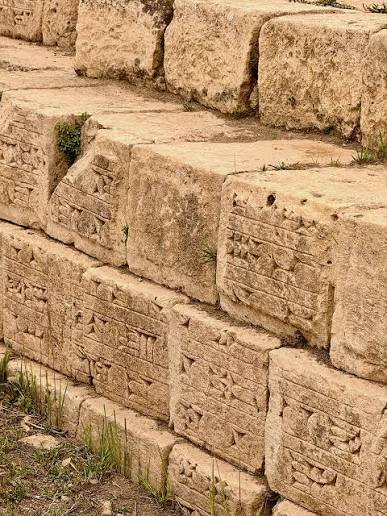
The Jerwan Aqueduct, one of the park's most prominent landmarks, is widely considered among the world's earliest monumental stone aqueducts. Built centuries before similar engineering projects emerged elsewhere, it carried water across valleys and rugged terrain to supply Nineveh, demonstrating the extraordinary technological capabilities of the Assyrian Empire.
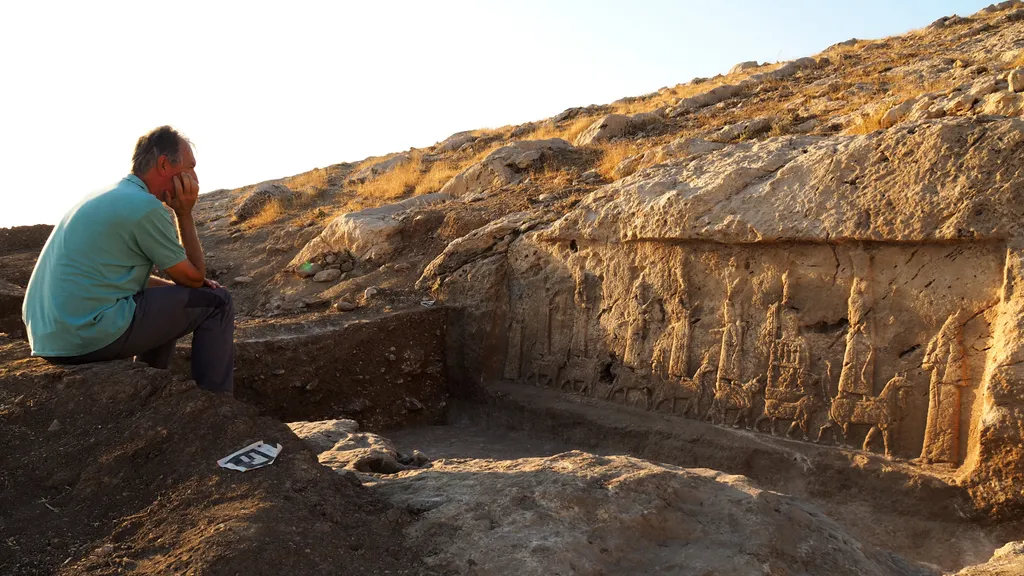
The newly protected landscape also includes the Faida Canal, where archaeologists uncovered a series of monumental rock reliefs carved during the reigns of King Sargon II and King Sennacherib. These reliefs depict the Assyrian ruler paying homage to major Assyrian deities, including Ashur, Ishtar, Shamash, and Nabu, offering a rare glimpse into the religious and political worldview of ancient Assyria.
Together, Jerwan and Faida provide powerful evidence of the sophistication, organization, and cultural achievements of the Assyrian Empire at its height.
More Than Ancient History
For many observers, the archaeological park represents an opportunity to celebrate an ancient civilization. For Assyrians, however, these sites are not merely remnants of a vanished past.
The canals, reliefs, and monuments being preserved are part of the historical homeland of the Assyrian people, whose presence in northern Mesopotamia predates the rise of the modern states that now govern the region. Thousands of Assyrians continue to live in nearby communities across the Nineveh Plain and parts of Duhok Province, maintaining their language, traditions, and Christian faith despite centuries of persecution, displacement, and demographic decline.
The very landscapes now being promoted as tourist destinations remain deeply connected to the cultural memory and identity of modern Assyrians.
Many Assyrians therefore welcome the preservation of these monuments while also calling for greater recognition that Assyrian heritage is not solely archaeological. It is also human and contemporary.
Preservation Amid Ongoing Challenges
The opening of the Jerwan-Faida Archaeological Park comes as Assyrian communities continue to raise concerns regarding land ownership, property disputes, political representation, and demographic changes affecting historic Assyrian areas within the Kurdistan Region.
For decades, Assyrian organizations, church leaders, and activists have documented disputes involving lands traditionally inhabited by Assyrians in parts of Duhok Governorate and the Nineveh Plain. Numerous villages have reported challenges involving land encroachments, disputed titles, and difficulties securing legal remedies for ancestral properties.
These concerns have led Assyrian leaders to argue that preserving Assyrian monuments must be accompanied by stronger protections for the rights of the people whose ancestors built them.
Many point out that while international visitors will soon be able to admire the engineering genius of Sennacherib and the artistic achievements of ancient Assyria, the modern Assyrian population continues to seek meaningful guarantees for its cultural, political, and property rights within the region.
A UNESCO Opportunity and a Broader Responsibility
The Kurdistan Regional Government's pursuit of UNESCO World Heritage status for the Jerwan-Faida complex reflects the site's undeniable global significance. The preservation efforts undertaken in partnership with Italy's University of Udine have already contributed substantially to documenting and protecting these irreplaceable monuments through advanced conservation and digital mapping technologies.
If successful, UNESCO recognition would place the site among the world's most important cultural landscapes and further establish northern Iraq as a destination for archaeological tourism and historical research.
Yet the significance of Jerwan and Faida extends beyond archaeology.
These monuments stand as enduring testimony to the achievements of the Assyrian civilization under kings such as Sennacherib, whose vision reshaped the landscape nearly 2,700 years ago. They also serve as a reminder that the descendants of that civilization remain present in the region today.
As Iraq and the Kurdistan Region celebrate the preservation of Assyria's ancient legacy, many Assyrians hope that equal attention will be given to protecting the rights, lands, and future of the Assyrian people themselves. For them, safeguarding Assyrian heritage means not only preserving stone reliefs and aqueducts, but also ensuring that the communities connected to that heritage can continue to thrive in their ancestral homeland.