

Chaldean Church and People: An Ancient Heritage, a Living Faith, and a Renewed Commitment to Cultural Preservation
Rome - The history of the Chaldean Catholic Church is inseparable from the history of Assyrian Christianity in Mesopotamia, the ancient Syriac Christian tradition, and the survival of an indigenous people whose language, liturgy, and collective memory have endured through centuries of political upheaval, religious persecution, migration, and displacement.
The recent establishment of the Chaldean Heritage Committee by the Chaldean Synod in Rome in October 2026 is a significant development. It reflects an institutional commitment to preserving the historical, linguistic, liturgical, artistic, and communal heritage of the Chaldean Church and transmitting it to future generations.
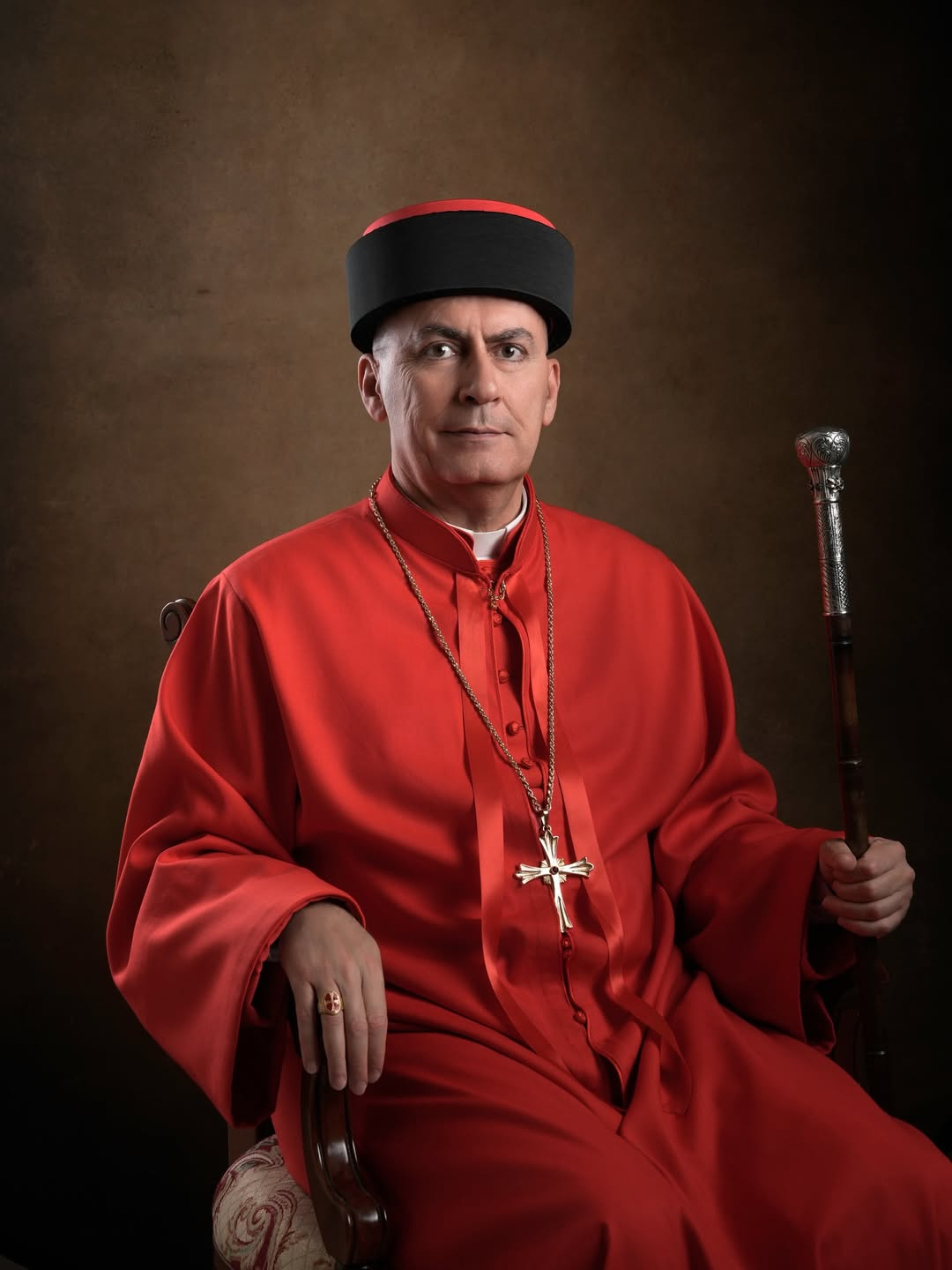
Under His Beatitude Mar Polis III Nona, the Chaldean Church has turned the tide against the Church's distancing itself from its heritage, particularly under the previous Patriarch, Mar Louis Raphaël I Sako, and now has an opportunity to strengthen the relationship between its Catholic faith and its ancient Church of the East heritage. This is particularly important at a time when emigration, declining knowledge of the ancestral language, and the loss of historic Christian communities threaten the continuity of this tradition. The Synod's recent statement specifically emphasizes the preservation of Chaldean liturgical heritage and the need to deepen the faithful's understanding of their liturgical tradition.
To understand the significance of this development, it is necessary to examine the origins of the Church, its relationship to the historical Church of the East, the emergence of the Chaldean Catholic identity, and the responsibility of the Church today to preserve its cultural inheritance.
I. Historical foundations: Christianity in Assyria
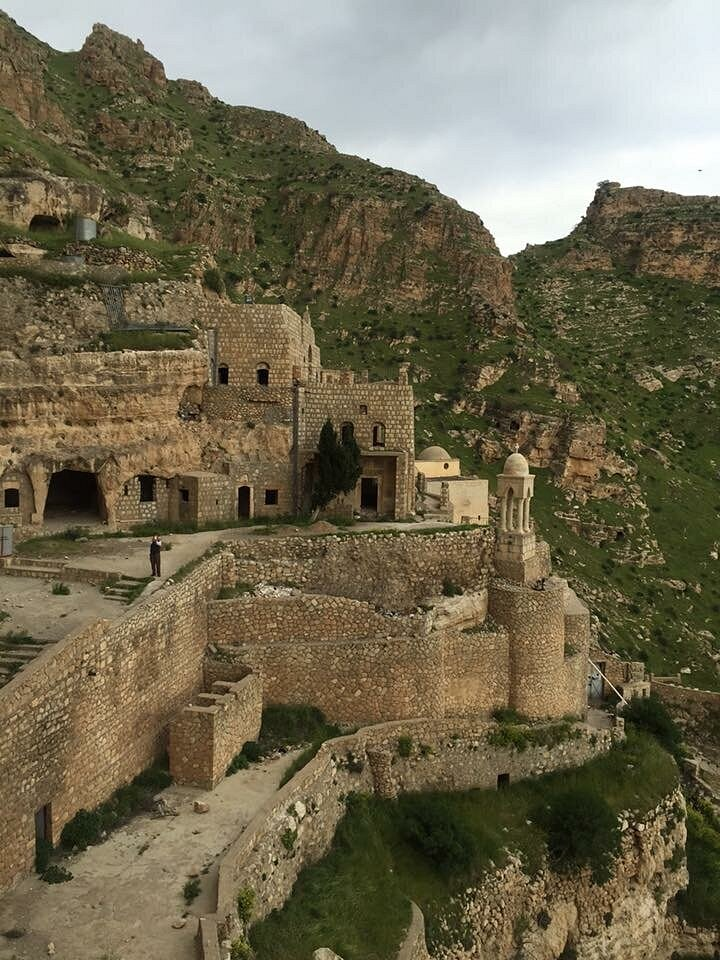
The Chaldean people belong to the broader historical world of the indigenous Christian communities of Mesopotamia, particularly northern and central Iraq, whose historical and cultural inheritance is connected to the civilizations of Assyria and Babylonia.
The ancient Chaldeans mentioned in the Bible and in Mesopotamian historical sources were a people of the first millennium BCE associated especially with southern Babylonia. The modern Chaldean Catholic identity, however, developed within the history of the Eastern Christian communities of Mesopotamia. The ancient and modern uses of the name Chaldean must therefore be distinguished rather than treated as identical categories across every historical period.
Christianity took root in Mesopotamia during the early centuries of the Christian era. According to the tradition of the Church of the East, its apostolic foundations are associated particularly with Saints Thomas, Addai, and Mari. Edessa, Arbela, and other centers of the Syriac-speaking East became important in the development of Christianity in the region.
Over time, the Church developed a distinctive theological, liturgical, and intellectual tradition. Its language of worship and scholarship became Syriac, a literary form of Aramaic, while related forms of Aramaic continued to be spoken by local Christian communities.
The result was a distinctive Christian civilization rooted in Mesopotamia: one that produced theologians, biblical scholars, poets, monks, monasteries, schools, manuscripts, and liturgical compositions.
By late antiquity, the Church of the East had developed a hierarchical structure centered on the Catholicos-Patriarch, with major ecclesiastical institutions in the Sasanian Persian Empire.
Its history was shaped partly by the political boundary separating the Persian Empire from the Roman and Byzantine worlds. The Church developed its own ecclesiastical institutions and theological vocabulary while maintaining its Christian faith and connections with other Christian communities.
The Church's intellectual reach extended far beyond Mesopotamia. Through missionary activity, its clergy and communities carried East Syriac Christianity into Persia, Central Asia, India, and as far as China.
Its heritage includes:
- Language: Syriac, alongside the living Aramaic dialects spoken by its communities.
- Liturgy: The East Syriac liturgical tradition, including the ancient Anaphora of Addai and Mari.
- Music: A rich body of ecclesiastical chants transmitted across generations.
- Scholarship: Biblical interpretation, theology, philosophy, medicine, and manuscript production.
- Monasticism: Monasteries and schools that served as centers of prayer, education, and literary preservation.
This tradition is fundamental to understanding the historical identity of the Chaldean Church. The Chaldean Catholic Church did not develop its distinctive liturgical inheritance from nothing; it inherited and continued the East Syriac ecclesiastical tradition while entering into full communion with Rome.
The terms Church of the East and Chaldean Catholic Church are therefore related but not interchangeable: the former identifies the older ecclesiastical tradition, while the latter identifies a Catholic Church that emerged from a particular historical branch of that tradition.
II. The emergence of the Chaldean Catholic Church
The decisive institutional turning point came in the sixteenth century, when a succession dispute within the Church of the East led to the emergence of a branch that later entered into communion with the Roman Catholic Church.
In 1552, a group of bishops opposed the hereditary succession arrangement associated with the patriarchal office and elected Mar Yohannan Sulaqa as their patriarch, who traveled to Rome, where he received recognition from the Pope in 1553. This event is generally regarded as the beginning of the modern Chaldean Catholic patriarchal line, although the subsequent history involved further divisions, negotiations, and changes in ecclesiastical allegiance.
The communities associated with this line gradually developed a distinct Catholic ecclesiastical identity while retaining the Church of the East liturgical tradition. The historical significance of this development is twofold:
- The Chaldean Catholic Church entered into communion with Rome without abandoning its Eastern liturgical inheritance.
- Its distinct Catholic identity developed within the broader historical world of the Church of the East, rather than replacing that history.
The term Chaldean Catholic thus came to designate a particular ecclesiastical identity. It should not be understood as evidence that the Church's entire history began in the sixteenth century. Further, the term Chaldean applied to all Assyrians or Syriac speakers.
Over subsequent centuries, the Chaldean Catholic Church maintained a distinctive religious life through its bishops, priests, monks, religious orders, families, and villages. Its heritage included the Church of the East liturgy, the traditional prayer books, biblical and theological manuscripts, ecclesiastical music, and the use of Syriac in worship and daily life. The Church also retained an important connection to the monasteries and historic Christian centers of northern Iraq, including Alqosh and the region surrounding the Nineveh Plains, or the Assyrian heartland.

Manuscript in Syriac.
These institutions were more than places of worship. They served as repositories of collective memory and as centers through which religious knowledge, language, and inherited practices passed from one generation to the next. The Chaldean Church's cultural inheritance is therefore not merely an accessory to its religious identity. Its liturgy, language, music, and historical memory are integral expressions of the particular Christian tradition it has inherited.
III. The Chaldean Church in the modern era
The modern history of the Chaldean Church has been marked by profound upheaval. During the late Ottoman period and the First World War, Christian communities throughout the region experienced massacres, persecution, displacement, and the destruction of historic settlements. The experiences of Chaldeans (or Assyrians/Syriacs) differed by locality, but they formed part of the broader catastrophe suffered by entire Assyrian Christian communities of the Ottoman and neighboring territories. During the twentieth century, political instability, conflict, economic pressures, and successive waves of migration further weakened the historic Christian presence in Iraq.
The 2003 invasion of Iraq and the violence that followed accelerated emigration. The rise of ISIS in 2014 brought another devastating crisis. Christians were driven from Mosul and surrounding communities, churches and monasteries were damaged or destroyed, and families lost homes, businesses, and ancestral lands.
These developments threatened not only the survival of Christian communities but also the cultural environment in which their heritage had been preserved.
A language is more difficult to transmit when children grow up far from the villages where it was spoken. Traditional chants are harder to sustain when fewer people can sing them. Manuscripts and ecclesiastical objects become more vulnerable when monasteries and churches are abandoned or destroyed.
The resulting challenge is therefore both demographic and cultural: the Church must preserve its living tradition even as the geographic communities that sustained it continue to diminish.
2. The diaspora and the future of Chaldean identity
Today, Chaldean Catholics live throughout Iraq and across substantial diaspora communities, particularly in the United States, Europe, Australia, and other parts of the Middle East. The diaspora has provided safety, educational opportunities, and economic stability for many families. It has also created new challenges for cultural continuity. Younger generations may remain committed to Catholic faith while becoming less familiar with the language, liturgical music, history, and customs of their ancestors. English and other majority languages increasingly dominate family and community life.
This creates an important distinction between preserving religious affiliation and preserving the full inheritance of a particular Eastern Christian tradition. A person can remain Catholic while losing the ability to understand the prayers of the Church. A parish can continue celebrating Mass while traditional chants gradually disappear. A community can retain its name while losing access to the manuscripts, archives, photographs, and oral histories that document its past.
The long-term preservation of Chaldean identity therefore requires more than maintaining church buildings and sacramental services. It requires an active program of cultural transmission.
IV. Patriarch Louis Raphael Sako and the question of cultural identity
Patriarch/Cardinal Louis Raphael Sako, who served as Chaldean patriarch from 2013 until his resignation in March 2026, led the Church through a particularly difficult period of persecution, displacement, political uncertainty, and declining Christian numbers. His leadership also occurred amid debates concerning the relationship between religious identity, ethnic identity, Iraqi citizenship, and the different historical identities claimed by Chaldean, Assyrian, and Syriac communities.
Some critics of the previous patriarch's approach believed that his emphasis on ecclesiastical identity, modern citizenship, and political accommodation did not sufficiently foreground the Church's inherited cultural and historical traditions. From that perspective, there was a concern that the Church's distinctive heritage could become secondary to immediate pastoral and political considerations. That criticism should, however, be distinguished from a claim that Sako categorically opposed cultural preservation. The documentary record is more complicated.
In a February 9, 2026 letter explicitly titled Chaldean Identity, Sako strongly affirmed the Chaldean identity of his Church, described the historical relationship with the Church of the East, and called for respect for Chaldean, Assyrian, and Syriac identities. He also characterized these identities as diverse but complementary. His earlier public statements likewise recognized the importance of preserving the Church's spiritual heritage and the responsibility of Chaldeans to maintain their ancestral inheritance.
Consequently, the strongest historically defensible formulation is not that Sako simply sought to eliminate culture and tradition, but that his approach to identity and ecclesiastical leadership was contested, and that there is now an opportunity to give cultural preservation a more explicit institutional role within the Church.
That distinction matters. The present initiative can be recognized as a potentially important development without relying on an oversimplified account of the previous patriarch's record.
V. His Beatitude Mar Polis III Nona: A renewed emphasis on heritage

Mar Polis III Nona, born Amel Shamon Nona in Alqosh in 1967, was elected patriarch on April 12, 2026, and installed in Baghdad on May 29, 2026. Before his election, he served as Archbishop of Mosul and later as bishop of the Chaldean Eparchy of Saint Thomas the Apostle in Australia and New Zealand.
The election of Mar Polis III Nona represents a new chapter in the leadership of the Chaldean Church. His background is especially relevant to the challenges facing the Church. He has served communities in northern Iraq that experienced severe persecution and displacement, as well as a diaspora community in Australia. His experience therefore connects two central realities of contemporary Chaldean life: the struggle to preserve the historic Christian presence in the homeland and the need to sustain the faith and heritage of communities living abroad.
The significance of his leadership should be assessed through concrete ecclesiastical decisions, pastoral priorities, and institutional initiatives rather than assumptions about his personal intentions. One such decision is now particularly important: the establishment of the Chaldean Heritage Committee by the Synod in Rome in October 2026.
The Synod's official statement confirms that the bishops met under Patriarch Nona's presidency from October 16 to 19, 2026, approved synodal committees, devoted particular attention to Chaldean liturgical heritage, and encouraged the faithful in the diaspora to preserve their faith, heritage, language, and bonds with the Mother Church.
This provides a concrete basis for describing the current patriarchal period as one in which the preservation of cultural and liturgical heritage is receiving renewed institutional attention.
VI. The Chaldean Heritage Committee: A significant institutional development
The establishment of the Chaldean Heritage Committee is important because it places the responsibility for cultural preservation within the Church's formal institutional structure.
According to the announcement provided, the committee's mandate encompasses the documentation, preservation, and transmission of the Chaldean heritage across a wide range of areas.
The committee's principal areas of responsibility

1. Language and liturgical tradition
Preserving the Chaldean spoken language, East Syriac liturgical texts, traditional chants, prayer books, and the knowledge required to transmit them to younger generations.

2. Manuscripts, archives, and historical records
Documenting manuscripts, eparchial archives, periodicals, photographs, historical documents, and other materials that record the intellectual and communal history of the Church.

3. Churches, monasteries, and architecture
Recording historic ecclesiastical buildings, monasteries, libraries, museums, architectural features, and the material objects that embody centuries of religious life.

4. Sacred art and ecclesiastical objects
Documenting liturgical furnishings, sacred art, vestments, crosses, vessels, and other objects that express the artistic and spiritual traditions of the Chaldean Church.

5. Community history, martyrs, and consecrated life
Recording the histories of Chaldean communities, their martyrs, priests, monks, religious sisters, and other consecrated men and women, including the lives and contributions of individuals whose stories might otherwise be lost.
The scope of this mandate is noteworthy because it recognizes that heritage is not confined to theology or formal church history. It also resides in everyday language, music, architecture, photographs, family and village histories, and objects passed down through generations.
Why this committee matters
The committee can potentially serve three interconnected purposes.
First, it can safeguard vulnerable historical materials. Manuscripts, archival records, photographs, and liturgical objects may be dispersed across different dioceses, monasteries, and diaspora communities. A coordinated effort can identify these materials, document their provenance, and support their preservation.
Second, it can reconnect the faithful with their inherited tradition. Historical documentation becomes especially valuable when it informs language instruction, liturgical education, youth programs, publications, exhibitions, and the training of clergy and cantors.
Third, it can transmit the Church's heritage to future generations. The goal should not be merely to store artifacts or produce inventories. It should be to ensure that the language is spoken, the chants are sung, the manuscripts are studied, and the historical memory of the community remains part of its living identity.
The committee's effectiveness will ultimately depend on its resources, professional expertise, cooperation with dioceses and religious institutions, and ability to engage scholars and laypeople in both Iraq and the diaspora.
VII. Faith, language, and heritage: Why they belong together
The Chaldean Church's cultural heritage is inseparable from its distinctive place within Eastern Christianity.
1. Language is a vehicle of religious memory
The ancestral language spoken by Chaldean communities and the Syriac language of their liturgical tradition connect contemporary worshippers to generations of Christians who prayed, taught, composed hymns, and preserved their faith in the same linguistic world.
Language carries more than vocabulary. It conveys theological concepts, poetic expressions, historical references, and ways of understanding the sacred.
Preserving it therefore requires both scholarly documentation and practical use: family conversation, education, children's programs, liturgical instruction, and accessible learning materials.
2. Liturgy and chant embody historical continuity
The East Syriac liturgical tradition is one of the defining inheritances of the Chaldean Church. Its prayers, chants, and ceremonial practices preserve centuries of theological reflection and communal worship.
Traditional chants should not be treated as merely decorative additions to a service. They are part of the Church's inherited religious expression and collective memory.
Preservation requires recording traditional melodies, identifying their regional variations, documenting their texts, training new cantors, and ensuring that the faithful understand what they sing and hear.
3. Manuscripts and material culture preserve evidence
Manuscripts, churches, monasteries, ecclesiastical furnishings, and historical photographs are primary sources for reconstructing the past.
They can reveal how communities worshipped, educated their children, organized religious life, developed artistic traditions, and responded to periods of persecution and migration.
Their preservation also allows future generations to investigate their history through evidence rather than relying exclusively on incomplete recollections or competing modern narratives.
4. Cultural preservation need not diminish religious universality
The Chaldean Church is fully Catholic and participates in the universal mission of the Catholic Church. At the same time, it possesses a particular historical, linguistic, and liturgical inheritance.
These dimensions need not compete.
A Church can embrace universal Catholic communion while maintaining its own Eastern Christian tradition. Indeed, preserving its distinctive heritage contributes to the diversity and richness of the wider Catholic communion.
The objective is not to replace faith with ethnic identity, nor to turn cultural preservation into political nationalism. It is to recognize that a particular community's faith has been transmitted through a specific historical civilization, language, liturgy, and collective experience.
An especially valuable step would be to establish a coordinated digital heritage archive connecting the patriarchate, eparchies, monasteries, parishes, and diaspora organizations. Such an archive could preserve materials even when the original documents must remain in their current locations.
It would also be important to distinguish preservation from interpretation. The committee should document sources carefully, preserve different historical accounts where appropriate, and encourage serious scholarship. A well-documented heritage is more durable and credible than one dependent on assertions that cannot be independently examined.
Conclusion: Preserving an inheritance, strengthening a future
The history of the Chaldean Church is a history of continuity through change. From the ancient Christian communities of Assyria and the development of the Church of the East to the emergence of the Chaldean Catholic patriarchal line in the sixteenth century, the Church has maintained a distinctive Eastern Christian tradition while adapting to changing political, ecclesiastical, and social circumstances.
Today, its greatest challenges include the loss of historic Christian communities in Iraq, the dispersal of its people throughout the diaspora, the declining transmission of the ancestral language, and the vulnerability of its manuscripts, music, architecture, and collective memory. The establishment of the Chaldean Heritage Committee under the current patriarchal leadership is therefore a potentially consequential step. It provides an institutional framework through which the Church can move beyond general appeals to preserve tradition and toward the systematic documentation, protection, study, and transmission of its heritage.
The importance of this initiative should not be measured solely by the number of manuscripts cataloged or buildings documented. Its ultimate value will lie in whether the next generation can understand the language of its ancestors, recognize the prayers and chants of its Church, appreciate the history of its communities, and inherit a meaningful connection to the Christian civilization that shaped their forebears.
The Chaldean Church need not choose between its Catholic faith and its ancient heritage, for the two are not in conflict but are deeply intertwined. Its distinctive contribution to universal Christianity is inseparable from the ancient Eastern Syriac tradition through which it has received, preserved, and transmitted the faith across generations. Preserving this heritage is not merely an act of cultural conservation; it is also a reaffirmation of the oneness of the Chaldean, Assyrian Church of the East, and Ancient Church of the East traditions.
Although these churches have developed distinct ecclesiastical identities and use different names to describe themselves, they share a profound historical, linguistic, liturgical, and cultural inheritance. Their differences in communion and ecclesiastical affiliation do not erase the deeper bonds that connect them as branches of the same Eastern Syriac Christian tradition. Indeed, the more faithfully each church preserves its ancestral language, liturgy, customs, and heritage, the more clearly it can recognize the common roots that unite them.
The path forward is not to erase their differences, but to rediscover their oneness. By embracing their shared inheritance, these churches can strengthen their bonds with one another, foster greater understanding among their faithful in both the East and the West, and ensure that the ancient tradition they collectively embody remains a living legacy for future generations.
Under Mar Polis III Nona, the Heritage Committee offers an opportunity to make that principle a lasting institutional commitment: not simply to remember the past, but to ensure that the Chaldean heritage remains a living inheritance for generations to come.