
By Ashur Shiba
March 3, 2026
Chicago - The 2026 contest for Illinois’ 9th Congressional District represents a pivotal transition moment. Long represented by Jan Schakowsky since 1999, who had always had a close relationship with the Assyrian community, the district is now open, triggering a competitive Democratic primary in what remains one of the most reliably Democratic seats in the Midwest.
From a structural standpoint, the general election outcome is highly predictable. The district, which includes parts of Chicago’s North Side and inner-ring suburbs such as Evanston, Skokie, Niles, and Glenview, consistently votes Democratic by wide margins. Its partisan lean makes it exceedingly difficult for a Republican to prevail in November. Consequently, the decisive contest will occur in the Democratic primary.
The Democratic Field
The Democratic field is crowded and ideologically diverse, reflecting generational and strategic divisions within the party.
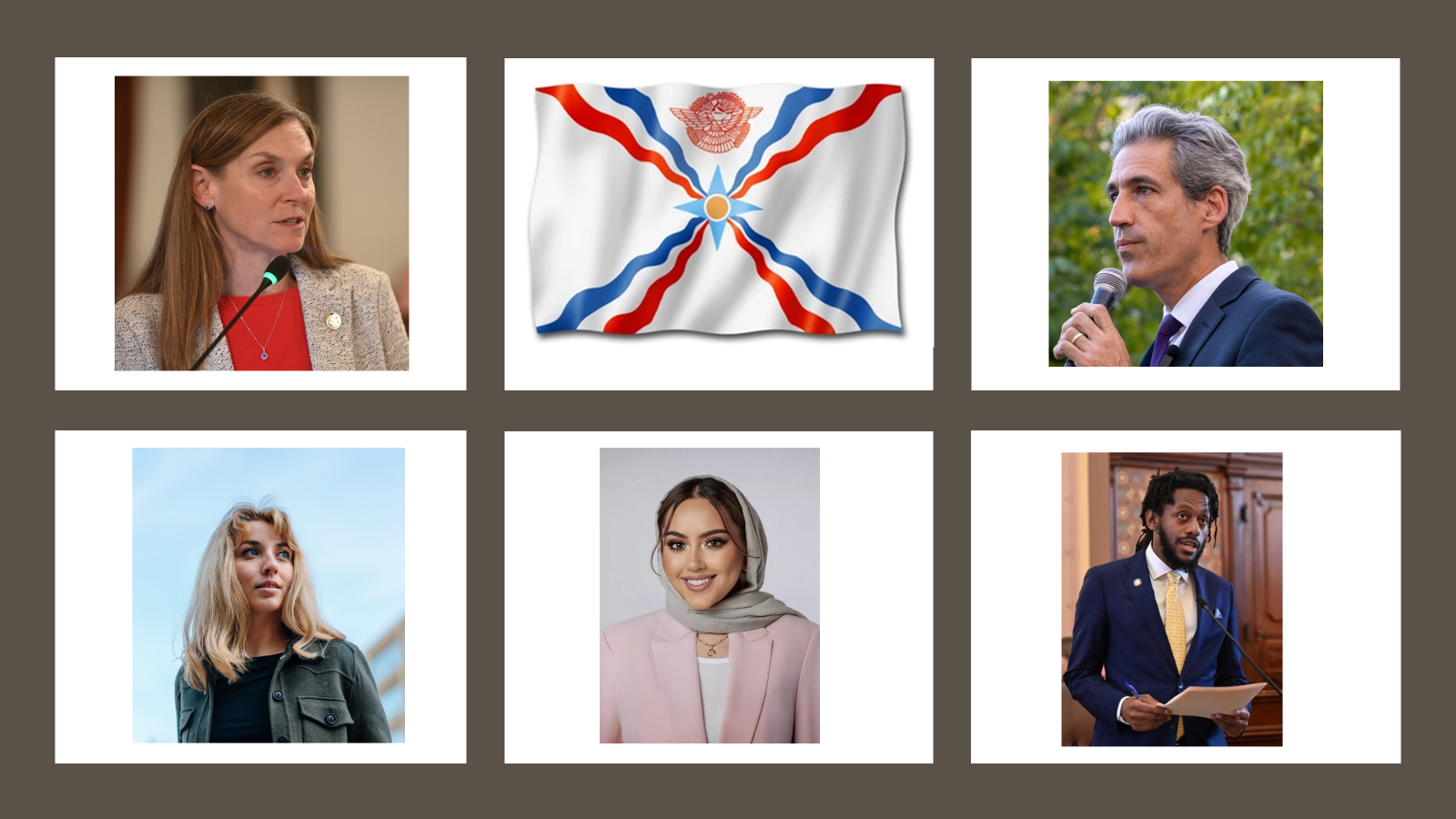
- Daniel Biss, former mayor of Evanston and former state senator, brings executive experience and name recognition across the district. Biss has met with Assyrian community leaders and is in contact with them.
- Laura Fine, currently serving in the Illinois State Senate after years in the State House, enters the race with a strong legislative résumé, established donor networks, and deep relationships within suburban Democratic organizations. Fine’s base in Glenview and North Shore communities positions her well among reliable primary voters. Fine has been a guest at Assyrian events and has expressed a desire to voice her opinion on issues of relevance to the community.
- Mike Simmons offers legislative experience and has built support among progressive constituencies, particularly in Chicago portions of the district.
- Bushra Amiwala, known for her earlier service on the Skokie School Board, appeals to younger and reform-minded voters.
- Kat Abughazaleh represents a newer generation of progressive activism, attempting to mobilize grassroots and digital-first voters.
- Hoan Huynh has emphasized affordability and housing policy as central themes.
In a field without an incumbent, coalition-building and turnout operations will be decisive. While ideological positioning matters, disciplined voter mobilization in concentrated communities will likely determine the nominee.
Why a Democrat Will Win
From a political science perspective, this district’s voting behavior is anchored in demographic fundamentals: high educational attainment, strong union presence, significant immigrant communities, and a long-standing liberal policy orientation. The partisan index strongly favors Democrats, and presidential-level performance consistently produces double-digit Democratic margins.
Under these structural conditions, the Democratic nominee is overwhelmingly favored to win the general election. Therefore, the strategic imperative for organized constituencies is clear: engagement in the Democratic primary is the point of maximum influence.
The Assyrian Community as a Strategic Electoral Bloc
One of the most significant yet underanalyzed constituencies in IL-09 is the Assyrian population. The Chicago metropolitan area contains one of the largest Assyrian diasporic communities in the United States, with particular concentration in suburbs such as Skokie and Niles, areas squarely within the 9th District and where Assyrians have strong presence and organizational activities.
Assyrians in the region are institutionally organized through churches, civic associations, business networks, and cultural foundations. This organizational density translates into mobilization capacity. In low- to mid-turnout primary elections, where margins between leading candidates may be narrow, such a community can function as a decisive voting bloc if unified or strategically aligned.
For Democratic candidates, outreach to Assyrian voters is not symbolic; it is electorally rational. Issues that resonate within the community include:
- Immigration and refugee policy
- Religious freedom and minority protections
- Small business development and contacts with the Assyrian American Chamber of Commerce
- U.S. foreign policy toward Iraq, Syria, Iran, and the broader Middle East in the interest of the Assyrian population
- Cultural preservation and minority language rights, including support for an Assyrian school
Candidates who engage substantively, not merely performatively, with these priorities may secure both votes and long-term political alliances.
This is a fragmented field and candidates must build a coalition that extends beyond their immediate geographic base. Engagement with organized communities such as Assyrians could provide incremental but decisive advantages in precinct-level performance, especially in suburbs where turnout margins matter.
A Strategic Outlook for Assyrians
For the Assyrian community, the implications are straightforward:
- The general election will almost certainly produce a Democratic member of Congress.
- Therefore, influence must be exerted during the Democratic primary.
- Early engagement with viable Democratic candidates increases leverage.
- Consolidated voting behavior enhances bargaining power in future legislative and district matters.
This is not merely about short-term electoral outcomes; it is about long-term institutional positioning. Communities that demonstrate mobilization capacity are communities that receive appointments, federal advocacy, district resources, and sustained political attention.
Conclusion
The 2026 race for Illinois’ 9th Congressional District will be decided within the Democratic Party. While multiple credible contenders are competing, including Daniel Biss, Laura Fine, and others, the structural advantage of Democrats in the district makes the primary the focal arena of political power.
For the Assyrian population in IL-09, this election cycle presents a strategic opportunity. By concentrating attention on the Democratic field and engaging early and cohesively, the community can convert demographic presence into political capital; positioning itself advantageously for representation, policy advocacy, and long-term influence in a district that will remain Democratic for the foreseeable future.