

By Gabriel Marko
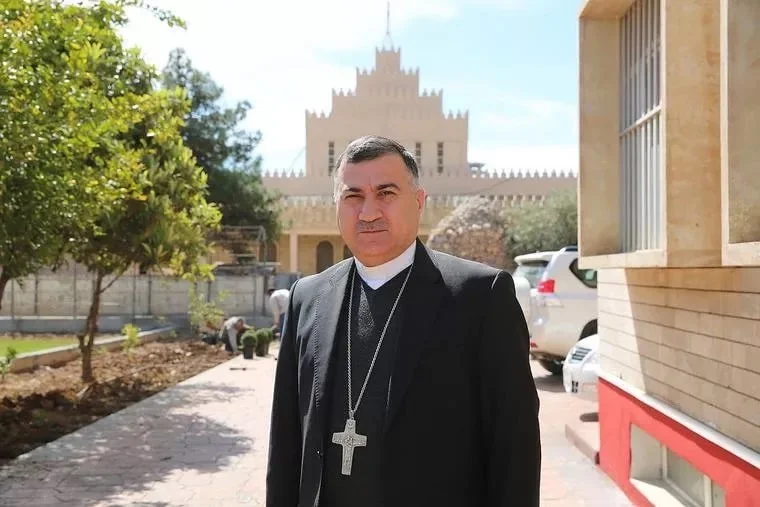
ERBIL, IRAQ — Chaldean Catholic Archbishop Bashar Matti Warda has called upon Chaldean Patriarch to become a strong advocate for Ankawa and its Christian population, urging him to help ensure that the community retains a meaningful voice in determining the future of the last major Christian urban center in Iraq.
Speaking during Patriarch's visit to Ankawa, a predominantly Christian district of Erbil that today hosts Iraq's largest concentration of Christians, Archbishop Warda emphasized the historic significance of the Patriarch's decision to make Ankawa his first stop outside Baghdad following his enthronement.
"The message to the people of Ankawa is clear: you are in my heart," Warda said, describing the visit as a recognition of the community's importance to the future of Christianity in Iraq.
The Archbishop placed Ankawa's current challenges within the broader history of Christianity in the ancient region of Adiabene (Christian Assyria), known today as Erbil and its surrounding areas. He recalled centuries of persecution and survival, including the massacre of Christians at the Erbil Citadel in 1310, which forced survivors to flee to Mosul and the towns and villages of the Nineveh Plain.
Despite repeated waves of violence and displacement, Warda noted, Christianity endured.
"Ankawa remained a living witness to perseverance," he said, noting that by the sixteenth century it had become the only remaining Christian-majority village in the region.
That historic role was once again tested in 2014 when ISIS seized Mosul and large portions of the Nineveh Plain, triggering the largest displacement of Christians in modern Iraqi history. Tens of thousands fled overnight, abandoning homes, businesses, churches, and centuries-old communities.
Within weeks, Ankawa became the center of the humanitarian response. More than 13,000 displaced Christian families found refuge in churches, schools, community halls, and temporary housing established by the Chaldean Church and relief organizations.
According to Warda, the people of Ankawa opened their homes and institutions to those fleeing persecution, transforming the district into a sanctuary for Iraq's Christian population.
Yet more than a decade after the ISIS crisis, Iraq's Christians continue to face existential challenges. Once numbering well over one million before 2003, the Christian population has fallen dramatically due to war, instability, economic hardship, and emigration. Many families continue to leave Iraq, citing uncertainty about their future, limited political influence, and concerns about preserving their religious and cultural identity.
Against that backdrop, Warda argued that Ankawa's future carries significance far beyond its municipal boundaries.
For years, residents have voiced concerns about decisions affecting the district's development, including large-scale real estate projects, changes in land use, and what many perceive as an erosion of Ankawa's traditional Christian character. Concerns have also been raised about the expansion of nightlife and entertainment venues within residential areas, prompting debates over the preservation of the community's social and religious identity.
Warda acknowledged growing frustration among younger Christians but cautioned against directing that anger toward the Church.
He stated that since 2011 the Chaldean Church has increasingly been excluded from major decisions concerning Ankawa despite its historic role in the community. According to the Archbishop, this marginalization was not accidental.
"The sidelining of the Church was deliberate," he said, arguing that political and economic interests have often outweighed the long-term welfare of the city and its residents.
He further pointed to what many residents view as evidence of political neglect, including the prolonged absence of a permanent district administrator and a perceived lack of effective representation for the community in local decision-making.
Nevertheless, Warda expressed confidence that the Patriarch would advocate on behalf of Ankawa's Christians and communicate their concerns to authorities in the Kurdistan Region.
"Our Patriarch stands with us," he said, expressing hope that regional leaders recognize the importance of preserving a vibrant Christian presence in Iraq.
The Archbishop also highlighted the Church's efforts to strengthen the community despite ongoing challenges. Over the past decade, the Chaldean Archdiocese has expanded educational, religious, healthcare, and social institutions, including the construction of churches, schools, a university, a hospital, and media outlets serving the Christian population.
These institutions now provide hundreds of jobs and support services, helping families remain in Iraq at a time when emigration continues to threaten the survival of one of the world's oldest Christian communities.
Addressing Christian youth directly, Warda urged them to remain committed to their homeland and to pursue their rights through perseverance and civic engagement.
"Anger alone will not build the future," he said.
Today, Ankawa is home to approximately 75,000 Christians from Catholic, Orthodox, Apostolic, and Evangelical traditions. For many, it represents more than a district of Erbil; it is a symbol of Christian survival in Iraq.
As demographic pressures, political uncertainty, and continued emigration reshape the country's religious landscape, many Christians view the future of Ankawa as inseparable from the future of Christianity itself in Iraq.